
Arrest Warrants in Fulton County
An arrest warrant tells police to take a named person into custody. It is a written order from a judge, not a mere accusation. Fulton County splits the work between two courts. Superior Court handles felonies, while Magistrate Court reviews many warrant applications and holds first appearances. Before signing, the judge needs probable cause. That means enough reliable facts to reasonably believe an offense happened and this person committed it. An allegation by itself never becomes a warrant. A police officer usually brings a sworn affidavit to the magistrate. A private citizen can also apply through Fulton County Magistrate Court. A felony indictment can produce its own arrest directive once the case moves to Superior Court, and records tied to an open investigation may stay sealed even while the warrant remains fully enforceable.
Fulton County Magistrate Warrant Hearings
Fulton County residents can file their own warrant applications through the Fulton County Magistrate Court Criminal Division. Bring government photo identification, and be ready to lay out the facts behind the alleged offense. The court's published material sets a $20 filing fee for each accused person, though domestic-violence and sexual-offense claims are exempt. Filing alone does not guarantee that a warrant will issue. When immediate issuance is not justified, the accused gets notice of a probable-cause hearing, usually set within three weeks. Both sides may present evidence, and a magistrate then decides whether probable cause exists. That hearing notice is not an arrest warrant. Ignore it, though, and the accused may lose the chance to answer the claim before the court rules. The Magistrate Court's official page spells out the application process and fee.
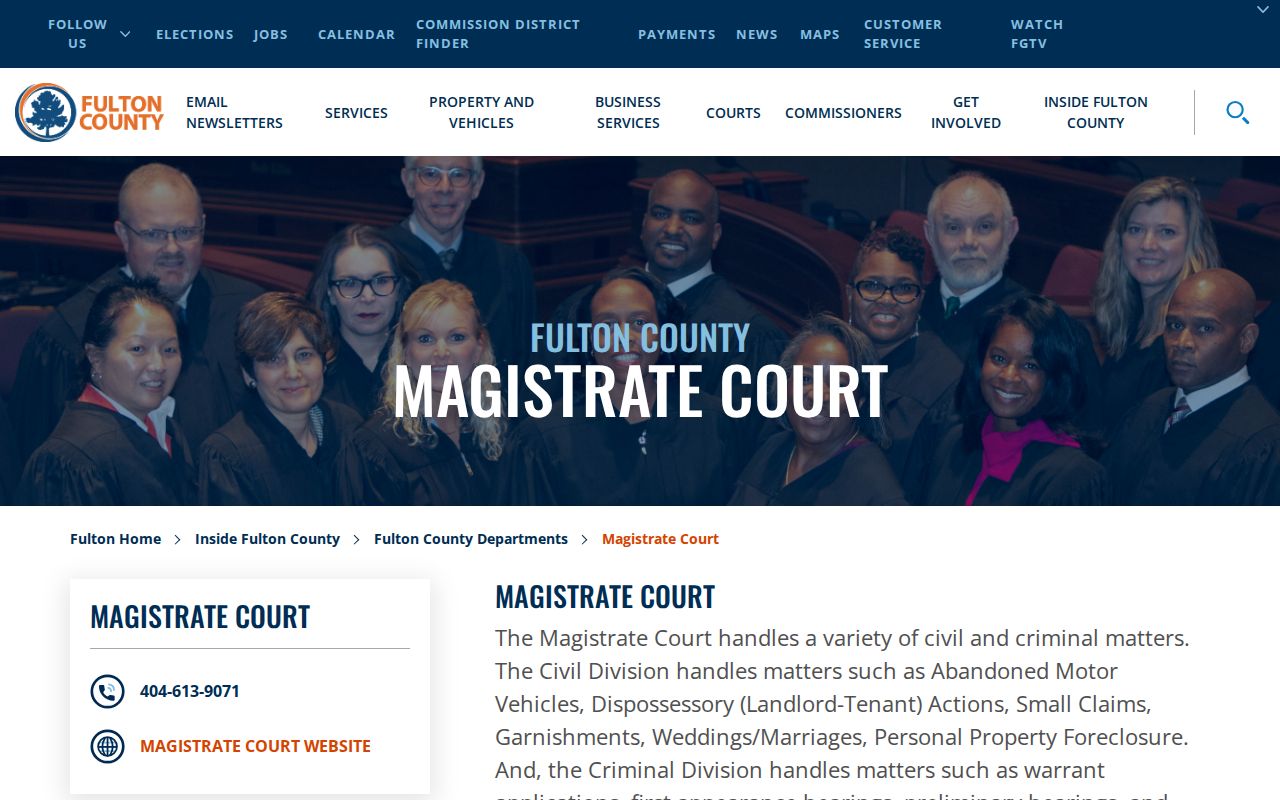
It shows the court route that handles warrant applications, first appearances, and preliminary hearings.
What a Fulton County Arrest Warrant Contains
Details on a Fulton County arrest warrant may sit in the signed order, the criminal docket, the booking record, or a later disposition. No single local number pattern is published. Use the warrant or case number exactly as the court gives it.
note
| Warrant or Case Number | The court's unique identifier for requests and clerk calls. |
|---|---|
| Named Subject | Legal name and available identifiers used to distinguish similar names. |
| Charge or Offense | The alleged count and cited law, not a finding of guilt. |
| Issuing Court | The judge or court that authorized arrest and controls recall. |
| Bond Information | Whether bond is set, restricted, or reserved for a judge. |
| Status Data | Issue date and any served, recalled, quashed, or returned notation. |
The public copy of a Fulton County arrest warrant may leave out the affidavit, an address, or investigative notes. Sealed and juvenile material stays restricted, and a missing document does not prove no enforceable order exists.
Fulton County Sheriff Confirmation Rules
Fulton County offers no full public online name search for arrest warrants. The Sheriff's GCIC and Warrant Unit posts one strict rule. Call 404-612-5129 and staff will not give warrant status by phone. Instead, the subject must appear in person at the Fulton County Courthouse or the Fulton County Jail with proper photo identification. Status goes only to that subject. Anyone worried about an arrest should talk with a Georgia criminal-defense lawyer first. Counsel can pinpoint the issuing court, pull public case information, and coordinate with the right agency. The Clerk of Superior and Magistrate Courts provides case records, but its search is not a complete warrant index. A written Sheriff Open Records Request can seek an existing public document, subject to fees and exemptions, though it is no substitute for a live status check. The Warrant Unit's official page documents the rule itself.
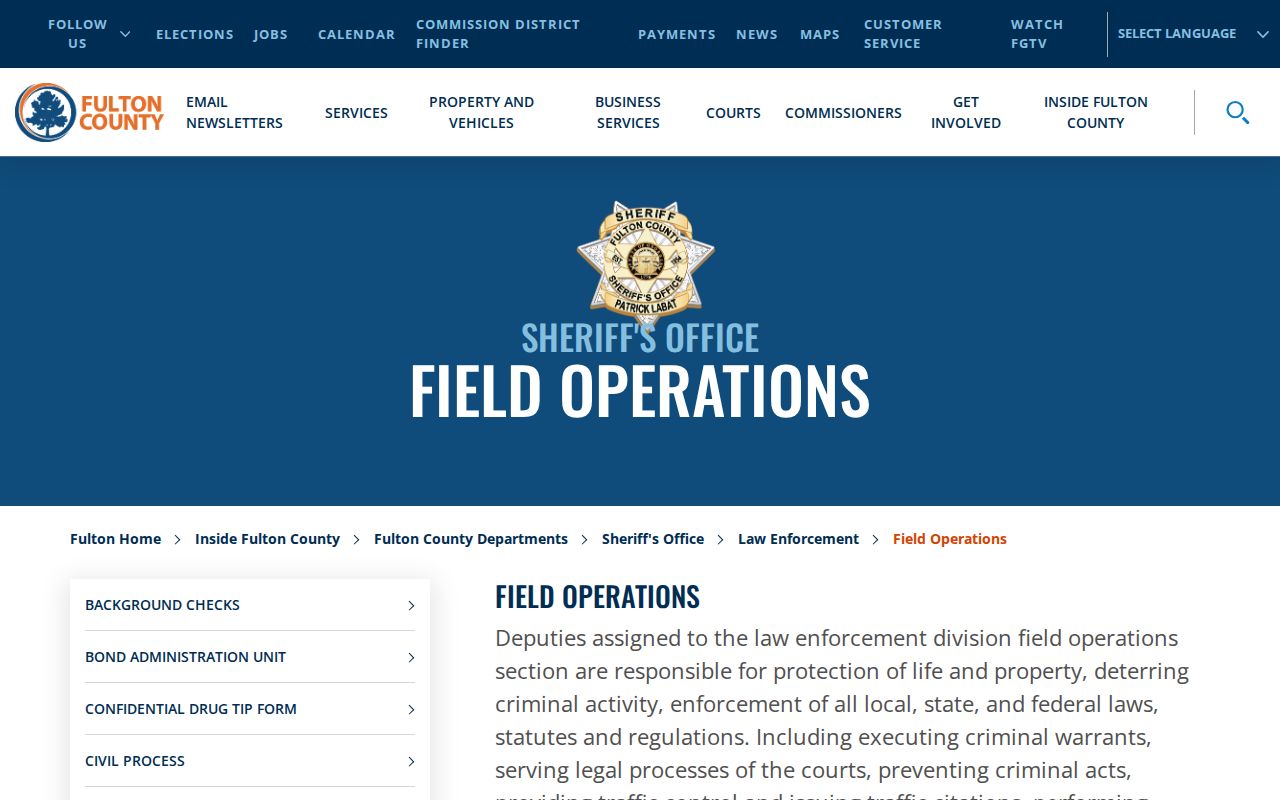
This rule keeps phone inquiries and public lists from being mistaken for direct confirmation.
How Fulton County Arrest Warrants Are Served
Service depends on the issuing court. The Sheriff's Warrant Unit verifies criminal warrants, enters eligible data into GCIC or NCIC, assigns warrants for service, and receives more than 21,000 criminal warrants in an average year. That figure counts annual intake, not active warrants. City police may serve warrants from their own cases. Another jurisdiction can arrest someone after a system hit. Fulton County also runs a separate Marshal's Department. The Fulton County Marshal serves felony and misdemeanor warrants from Magistrate Court, plus misdemeanor probation warrants from State Court. So the officer at the door may not be a sheriff's deputy. After arrest, booking happens at the Fulton County Jail, 901 Rice Street NW. Jail material describes an initial appearance, a charge review, and a bond process. The court controls the criminal case. Release on bond ends custody under set terms, but it does not dismiss the charge or cancel future dates. The Marshal's page lists each court it serves.
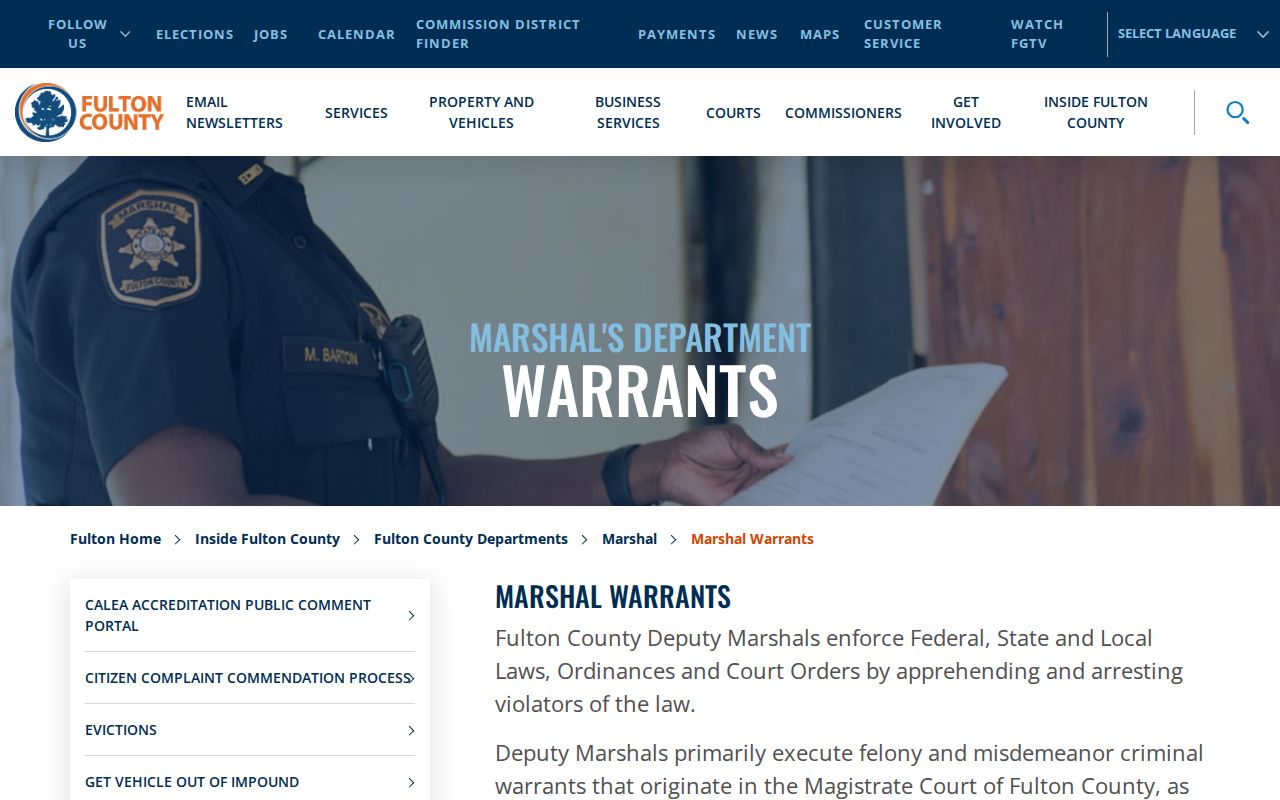
Tracing the issuing court first tells a Fulton County resident exactly which agency to contact about a warrant.
Fulton County Warrant Service Path
A Fulton County warrant can pass through several offices. Court staff issue and record it. Warrant staff verify the identifiers, then the Sheriff, Marshal, city police, or a task-force partner seeks service. Once served, the agency returns the order to court and begins booking and appearance procedures.
- A sworn complaint, affidavit, or indictment reaches a court with authority.
- A judge finds probable cause and signs the arrest order.
- Clerks and warrant staff check the charge and identifying data.
- An authorized agency arrests the named person and records service.
- The accused is booked, appears before a judge, and follows bond terms.
Federal warrants follow a separate track. The U.S. Marshals Service in the Northern District of Georgia and the Southeast Regional Fugitive Task Force handle federal or cross-jurisdiction cases reaching Fulton County. Sealed federal warrants never reach public PACER before unsealing.
Arrest Warrant vs Summons vs Bench Warrant
Each paper calls for a different response. An arrest warrant rests on probable cause for an alleged offense. A summons just orders an appearance, with no arrest directed first. When someone misses a date or disobeys an order, a bench warrant usually follows, and municipal courts in Fulton County often label it an FTA.
| Feature | Arrest Warrant | Summons | Bench Warrant |
|---|---|---|---|
| Direction | Take the subject into custody | Appear on a set date | Bring the person before court |
| Basis | Probable cause of an offense | Charge or required hearing | Missed date or violated order |
| Issuer | Judge or magistrate | Court or authorized officer | Judge handling the case |
| Response | Counsel, surrender, bond | Attend as directed | Reset, appear, seek recall |
Ignore a summons and it can become a bench warrant. Money alone will not recall an FTA warrant in Fulton County; only the issuing judge can enter a recall, quash, or other disposition.
Fulton County Booking and Bond
Fulton County Bond Administration lists three ways to post: cash, property, or a professional bonding company. Every instrument carries a $20 nonrefundable fee. Separate charges may need separate instruments and surcharges. The official pages disagree on cash. One Bond Administration page says no checks or credit cards at the facility. A Jail page accepts cash, cashier's checks, and postal money orders. Call ahead before you drive over. For a property bond, bring the deed, tax bill, mortgage statement, photo ID, and every listed owner. The property must sit inside Fulton County. Georgia land outside the county starts with that county's sheriff and arrives sealed. A bonding company may charge up to 15 percent of face value including surcharges, or a $50 minimum per charge. The Sheriff recommends no particular company.
Remember: Bond permits release while the case continues. It does not recall the warrant, dismiss the charge, or cancel court.
What to Do If There's a Warrant for You
A blank Most Wanted page proves nothing. Hire a lawyer first. Counsel can check the Superior, State, Magistrate, or municipal court that issued the warrant in Fulton County. Hand over the full name, birth date, possible charge, approximate date, and any warrant or case number. If you must confirm it yourself, follow the Sheriff's subject-only photo-ID rule. From there the options include a planned voluntary surrender, preparing a bond, or a motion asking the judge to recall or quash the order. A recall withdraws the active warrant. A quash formally nullifies it. Neither happens just because money was sent. Get a stamped order, disposition, or written release, and verify that Fulton County agency systems were updated.
Important: Speak with counsel before surrender. An active Fulton County arrest warrant can be served during lawful contact with police.
For a fuller checklist, see the Fulton County warrant records overview, and keep receipts and court paperwork after release.
Fulton County Arrest Record Access
The Georgia Open Records Act, O.C.G.A. § 50-18-70 et seq., covers records that already exist at public agencies. It does not force a new report. Exempt data stays off limits. A Sheriff records request needs your contact details, a clear description of the record, the date range, subject name, case number if known, delivery choice, and fee approval. The target response is three business days. Production can take longer. An exemption may also apply. The Fulton County Clerk of Superior and Magistrate Courts at 136 Pryor Street SW holds the related court files. Court Services answers at 404-613-5313. For Superior Court criminal information, call 404-612-8482 and ask for the criminal division. Cite the case number. Staff can hand you an existing public filing. Only the issuing court can confirm a recall or quash took effect. Sealed affidavits, GCIC or NCIC justice data, and juvenile records are not an unrestricted adult warrant list, and those limits protect active cases in Fulton County while keeping proper public filings open.