
How to Check for a Warrant in Fulton County
A warrant check in Fulton County begins with the likely issuing court. The Superior Court of Fulton County takes felony matters. Fulton State Court handles county misdemeanors and traffic cases. Magistrate Court hears warrant applications and preliminary issues, while each municipal court keeps its own city citations and failure-to-appear files. There is no universal index at the sheriff. Gather the legal name, date of birth, case or citation number, and the city or court tied to the event before calling. A lawyer can also help plan the response, since walking into an office with an active warrant can lead to arrest on the spot.
- Identify the court from a citation, notice, bond paper, or prior case record.
- Check that court's official case or clerk channel and note the case status.
- For a county criminal warrant, use the sheriff's subject-only, photo-ID process at the courthouse or jail.
- Ask the Fulton Marshal about its Magistrate and State Court warrant lane when that agency is listed.
- Get written proof from the issuing court after a recall, payment, surrender, or other disposition.
Georgia Crime Information Center data stays with law enforcement, so Fulton County residents cannot query it themselves. Driver Services only shows a license consequence, and it cannot clear a warrant.
Fulton Sheriff Photo-ID Check
The Fulton County Sheriff's Office Warrant Unit posts a rule that differs from a normal web lookup. Staff will not give warrant status over the phone. The subject has to show up in person. That means appearing at the Sheriff's Office in the Fulton County Courthouse or at the Fulton County Jail, presenting proper photo identification, and asking about their own status. The unit's number, 404-612-5129, helps with routing and current visit instructions, not telephone confirmation. The courthouse complex sits at 185 Central Avenue SW, Atlanta, and the Main Jail is at 901 Rice Street NW, Atlanta. Call ahead to confirm the entrance and public hours. The jail also limits electronic devices and certain other items. The Field Operations page itself describes how the Warrant and GCIC units run this process.
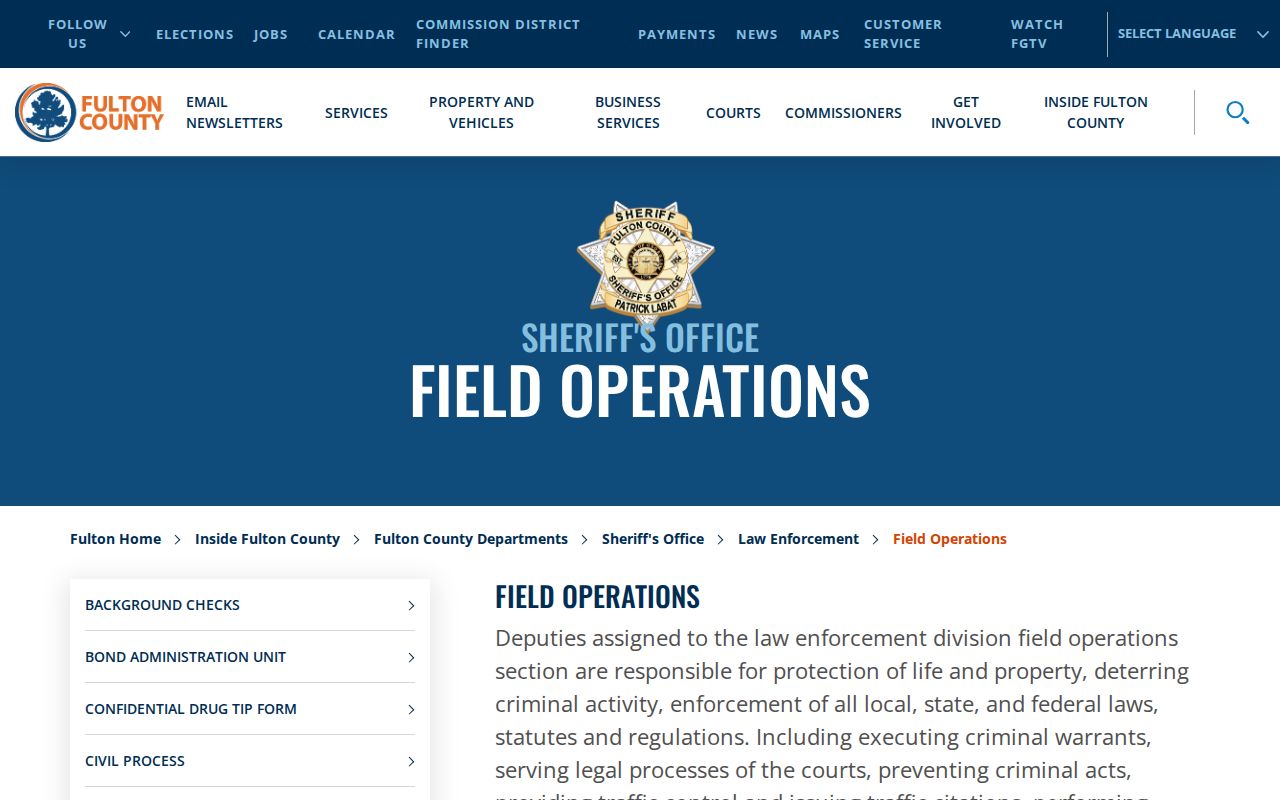
That same page covers intake, verification, database entry, and routing to deputies or the Fugitive Unit. It offers no public search form.
Types of Warrants in Fulton County
The label on a Fulton County warrant signals why it arose and which office controls it. An arrest warrant rests on a probable-cause finding. A bench warrant, or failure-to-appear warrant, usually follows a missed court duty. A search warrant lets officers seek evidence, and it is not part of any public self-check record.
| Warrant type | How it arises | Likely issuing court |
|---|---|---|
| Arrest warrant | A judge finds probable cause for an arrest | Magistrate or another criminal court |
| Bench or FTA warrant | A person misses court or fails to comply | Superior, State, Magistrate, or municipal court |
| Search warrant | A judge approves a search for evidence | Magistrate or another authorized court |
| Probation warrant | An alleged probation breach is reported | The court supervising the case |
Fulton materials stick to "bench warrant" and "failure-to-appear warrant." Texas-style "capias pro fine" is not the local term. City courts can hold their own FTA warrants even when no county publication shows them.
Fulton Warrant Intake by the Numbers
Fulton Sheriff Field Operations reports a heavy intake. Its GCIC Unit receives more than 21,000 criminal warrants in an average year. Staff identify subjects and review criminal history. They enter eligible records into GCIC and NCIC, then route warrants to an operational unit for service. That figure shows the scale of the work, not a count of active Fulton County warrants right now.
Fulton County publishes no official total of outstanding warrant records. Adding annual intake figures or city counts would build a false number, because warrants get served, recalled, returned, sealed, or held by separate courts.
What a Fulton County Warrant Record Shows
A warrant record can hold identity, authority, service, release, and status fields. No public view shows every one. A local case number may look like 2026-CR-01234, but no single format covers all Fulton County courts.
| Warrant or case number | The agency identifier used to distinguish one court order or case. |
|---|---|
| Subject | Name and other identifiers used to match the right person; access may be limited. |
| Charge or reason | The alleged offense, missed setting, or other basis for issuance. |
| Issuing authority | The court or judge that controls recall, quash, and later proceedings. |
| Bond | An amount or release type when the court permits release; it may not appear publicly. |
| Status | Active, served, returned, recalled, quashed, or another court-specific term. |
A record marked served proves execution, not dismissal. A recalled or quashed warrant ends the arrest authority while the underlying case lives on. Confirm the latest docket and get a signed order or disposition from the court.
Fulton Most Wanted Is Curated
The sheriff's Most Wanted Fugitives program is a curated public-safety list, not the full set of Fulton County active warrants. A listing can show a warrant number, alleged offenses, agency details, physical descriptors, status, and possible reward information. It may leave out the issuing judge, bond amount, and full docket, with no universal update time. The program page sticks to the heading and a tip area, without reproducing names, photographs, or profiles.
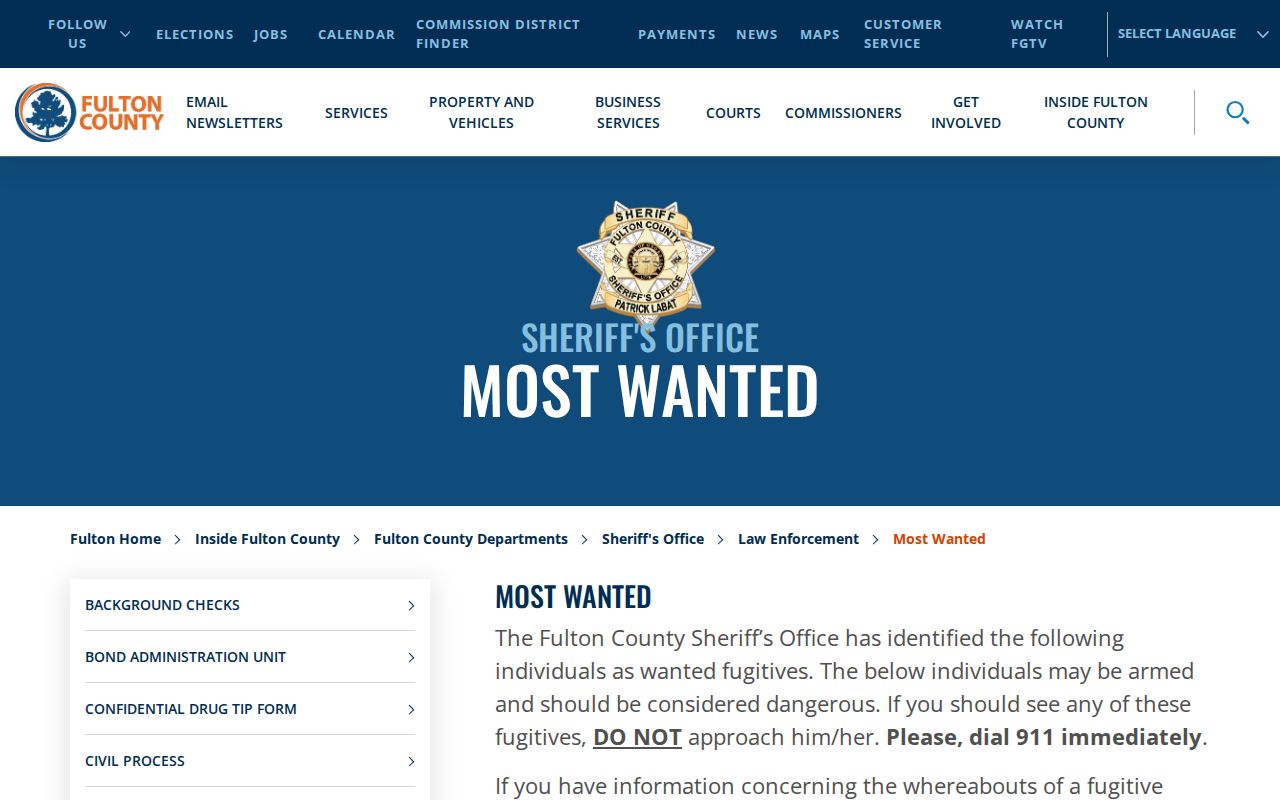
Someone missing from that Fulton County page may still have a city, county, sealed, newly issued, or out-of-jurisdiction warrant. Direct confirmation is still the only answer.
Tip safety: Do not approach a listed person. Use the official Crime Stoppers or P3 channel, and call 911 for an immediate threat.
Who Issues and Serves Fulton County Warrants
Judges issue Fulton County warrants, and service depends on the type. The sheriff executes criminal arrest warrants and routes records through GCIC. The Fulton County Marshal's Department documents service of Magistrate-originated felony and misdemeanor warrants plus State Court misdemeanor probation warrants. City police serve their own municipal court's orders.
Warrant flow: issuing judge › clerk or GCIC entry › sheriff, marshal, or city police service › return to the issuing court.
Fulton County Sheriff's Warrant Unit
Courthouse: 185 Central Avenue SW
Atlanta, GA 30303
404-612-5129
Fulton County Marshal's Department
160 Pryor Street SW, Suite J3-102
Atlanta, GA 30303
404-612-4472
Treat neither phone line as a promise of public status disclosure. Ask instead which Fulton County court or counter can lawfully confirm the record.
Fulton Open Records Fallback
There is another route. Georgia's Open Records Act lets you ask for an existing Fulton County warrant-processing record, a returned warrant, or any other nonexempt document. It cannot force an agency to build a live status report. Sealed files, juvenile matters, investigative work, and medical, insurance, or Social Security details all stay exempt. Name the agency, the court if you know it, the date range, the case or citation number, the record type, and the format you want. The Fulton County Sheriff's request form collects that, plus your contact details, a precise description, and a delivery choice. Delivery can run by mail, email subject to size limits, fax for ten pages or fewer, pickup, or in-person review. Search and retrieval are free for the first fifteen minutes. Copying, redaction, and direct administrative costs may follow. A cost estimate may come first. Georgia law generally calls for a response within three business days, though production can stretch when records are large or need review. A response, though, is not warrant clearance.
What to Do If You Have a Fulton County Warrant
Start by finding the issuing court. Its judge alone controls a recall or quash, the terms for withdrawing or setting aside the arrest order. Talk to a Georgia criminal-defense lawyer first. Do that before visiting the courthouse, the jail, or the police. Counsel can pull the case, ask whether a motion or reset is possible, discuss bond, and help plan a lawful surrender when one is needed. Bond has limits. Posting it may win release, but it does not dismiss the charge or erase later court dates in Fulton County. The county lists cash, property, professional, and some pretrial release routes. Each instrument carries a published $20 nonrefundable fee plus applicable surcharges. Charge and court set the exact amount and type.
Important: Do not ignore an active warrant or rely on online payment alone; obtain the issuing court's written recall, release, or disposition.
Keep every paper afterward. Hold on to the receipt, the signed order, the final disposition, and any Driver Services release. Then recheck the court docket. After an arrest, the Fulton County Main Jail runs intake and first appearance, and a person who does not bond out routinely sees a judge within 24 hours, with weekend timing differing.
Fulton Bond Administration Steps
Bond payments and refunds have one home. Look for the Bond Administration Unit on the ninth floor of the Justice Center Tower, 185 Central Avenue. Refunds are its job. Recalling a Fulton County warrant stays with the judge. Before paying, confirm the booking number, the charge, the issuing court, the bond amount, and whether more than one instrument applies. The official Bond Administration page lists each payment method and the unit's contact details.
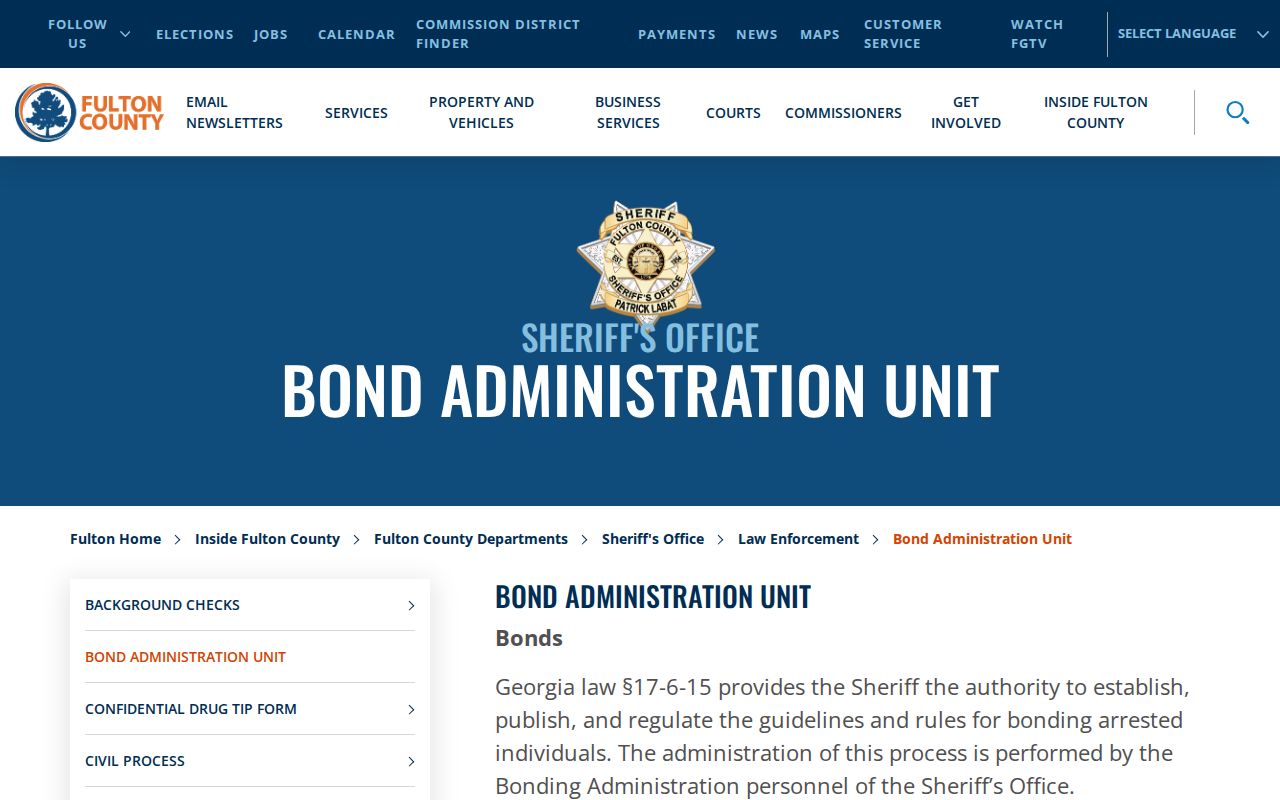
Cash usually means the full amount. Property bonds bring deed, tax, mortgage, identification, and owner-presence rules. A professional bonding company must be authorized by Fulton County, and the sheriff does not recommend one. Save the receipt and the surety name. Once final disposition lands, the named surety needs the refund notice, the original receipt or accepted proof, valid identification, and the final disposition. Cash-payment details differ across official pages. Verify the facility's exact instructions before travel.
Public Access to Fulton County Warrant Records
Access rests on law. The Georgia Open Records Act, O.C.G.A. § 50-18-70 et seq., opens existing public agency records, the base for any Fulton County warrant records request. Court records are different. They follow judicial access rules, sealing orders, and clerk procedures, and the act does not turn GCIC into a public search tool or require release of every warrant detail.
Key rules:
Requests should describe the records with enough detail for the custodian to locate them.
Agencies may redact protected facts and must identify the legal basis when withholding a record.
Juvenile, sealed, active-investigation, medical, and personal identifying information can remain restricted.
The Fulton County Clerk of Superior and Magistrate Courts holds the criminal and civil filings. City dockets live with each municipal clerk. A file may show a case status. Service status may be missing. The file may not reflect the latest law-enforcement entry, so when the answer shapes a planned surrender or court appearance, confirm with both the custodian and the issuing court.
Fulton Warrant Status Terms
Status words matter. In Fulton County warrant records, they describe the order at one point in its life. Pair them with the record date and the issuing court. A stale screen or an old payment receipt may not match the judge's latest order.
- Active
- The warrant remains open for service according to the controlling agency or court.
- Served
- Officers executed the warrant and returned it to the issuing authority.
- Recalled
- The issuing judge withdrew the warrant, often after a reset, appearance, or approved action.
- Quashed
- The court set the warrant aside by order; the underlying case may still proceed.
- FTA
- Failure to appear, meaning a required court date was missed.
- Returned
- The serving agency sent the warrant and service information back to the court.
“Cleared” means different things in different systems. Ask a Fulton County clerk whether the arrest authority ended, whether the case stays open, and whether GCIC or DDS received the needed update.
Fulton City Courts Keep Separate Records
Fulton County holds fifteen incorporated municipalities. Their city courts can keep traffic, ordinance, limited misdemeanor, and failure-to-appear matters outside the county court workflow. Each city runs things its own way. Atlanta has a dedicated municipal FTA process plus a GBI-authorized Warrant Division. Sandy Springs takes walk-ins for FTA or bench-warrant matters. South Fulton works from a court calendar, JusticeONE, and a Court Date Request Form, while Roswell routes missed dates through Court Services and its arraignment calendar. Johns Creek publishes a round-the-clock payment and court information line. This split is why one empty search settles nothing. A city portal covers only its own court. The Fulton County sheriff's Most Wanted page is curated, GCIC is not public, and DDS tracks a separate license consequence. Start with the court named on your citation or notice. For a distinct county matter, use Fulton County channels.
Note: A municipal payment can resolve an eligible citation without automatically recalling a warrant, so ask the clerk for written court confirmation.
Fulton DDS Status Is Different
Miss one traffic date in Fulton County and two separate machines start moving. A municipal or State Court judge can issue an FTA or bench warrant for the failure to appear. The court can also pass the driver's license number to the Georgia Department of Driver Services. DDS makes an FTA suspension effective 28 days after it gets notice. So a driver can clear one problem and still face the other.
That is why these records answer different questions. A DDS status is not a Fulton County warrant search. Fixing a license does not, by itself, prove a judge recalled a warrant. A recall should be followed by confirmation that any required DDS release went out, usually electronically. Keep the court disposition. Keep the license reinstatement proof too.
Missed a city traffic date instead? Contact that city's clerk before paying anything. Ask whether appearance is required. Ask whether an FTA fee applies, how to request a reset, whether a warrant has issued, and when the court will send a release.
Warrant Records by City in Fulton County
Fulton County's five largest cities each run their own municipal court and police route. Their pages cover city citations, ordinance cases, missed appearances, payments, resets, and records. They also mark the point where a city warrant enters a county or state system. Population figures below come from the 2020 Census and set the city order.
Atlanta Warrant Records
498,715 · Municipal FTA Court, Find My Case, and a dedicated warrant process.
Sandy Springs Warrant Records
108,080 · Municipal Court and Police share a complex, with FTA and bench-warrant walk-ins.
South Fulton Warrant Records
107,436 · Court calendar, JusticeONE, reset requests, and a city records route.
Roswell Warrant Records
92,833 · Court Services handles missed-date questions through its published calendar.
Johns Creek Warrant Records
82,453 · Court, police, and City Hall share one complex with a 24/7 information line.
For a city citation or a missed city date, start with the municipal court. For a separate Fulton County matter, use the county clerk, sheriff, or marshal.